
Turmeric + Black Pepper in Supplements: What Does Piperine Change?
Quick Answer
Direct answer: piperine is a compound in black pepper that can increase the bioavailability of curcumin, a major component of turmeric. But seeing “black pepper” on a supplement label does not automatically tell you how much piperine is present, how strongly absorption is changed, or whether the finished product has been clinically studied.
This distinction matters in multi-botanical products, where turmeric, black pepper, cayenne, garlic, beet root, or other ingredients may appear together. The formula should be judged by its complete label, not by one popular ingredient pairing.
Why are turmeric and black pepper paired?
One reason is to increase curcumin bioavailability. NCCIH notes that oral curcumin products vary widely and may include piperine from black pepper; combining curcumin with piperine is one approach used to improve absorption.
That does not mean every turmeric-plus-black-pepper supplement delivers the same exposure. Turmeric extracts can differ in curcuminoid content, and black pepper ingredients can differ in whether piperine is standardized and how much is used.
What is piperine?
Piperine is a naturally occurring constituent of black pepper. In supplement formulation it is often discussed because of its effect on the handling of certain compounds in the body. A label that says “black pepper” and a label that states a standardized amount of piperine are not necessarily equivalent.
Use the same label-reading logic you would apply to a botanical standardized to silymarin or an extract expressed as an equivalent milligram amount. Our Herbal Potency Labels guide explains those differences.
Does higher bioavailability automatically mean a better supplement?
No. Higher bioavailability means the body may be exposed to more of a compound; it does not automatically prove a better health outcome. Evidence must still connect the specific formulation and dose with a meaningful result.
NCCIH also cautions that highly bioavailable curcumin formulations may harm the liver in some people and notes reports of liver damage with certain enhanced-bioavailability products. “More absorbed” should therefore not be treated as a universal quality score.
What does current research say about turmeric?
Research is active, but NCCIH says there is not enough evidence to definitively conclude that turmeric or curcumin is beneficial for any health purpose. Studies use different extracts, doses, formulations, populations, and outcomes, which makes direct comparison difficult.
This is especially important for multi-ingredient retail products. Evidence on isolated curcumin or a standardized extract does not automatically prove the benefits of a finished 12-in-1 botanical blend.
How does this relate to Luvixy multi-botanical products?
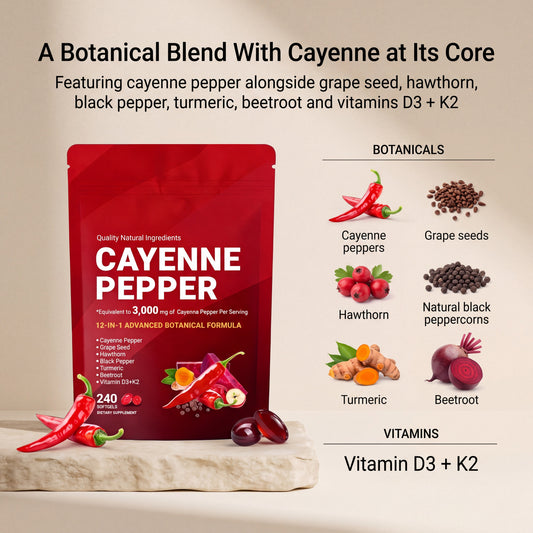
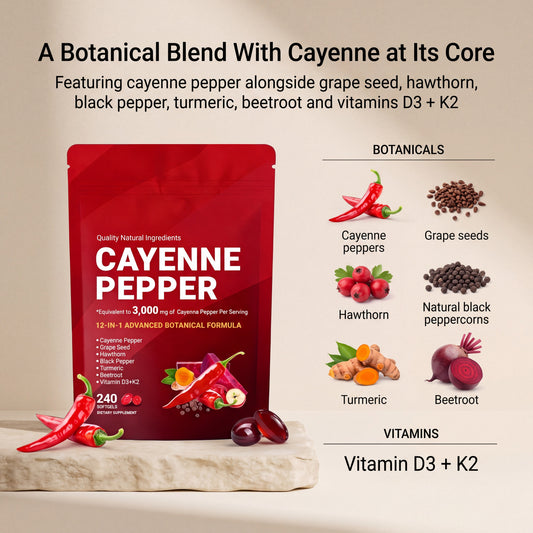
Cayenne Pepper 12-in-1 Botanical Formula 3000 mg – 240 Softgels is a useful example of why shoppers should read a multi-botanical label ingredient by ingredient. If the current label lists turmeric and black pepper, check the exact form, declared amounts, serving size, and whether piperine or curcuminoids are standardized rather than assuming the pairing has one universal meaning.
For multi-ingredient comparison, read 12-in-1 Herbal Blends vs Single-Ingredient Supplements.
Can turmeric overlap with other Luvixy formulas?
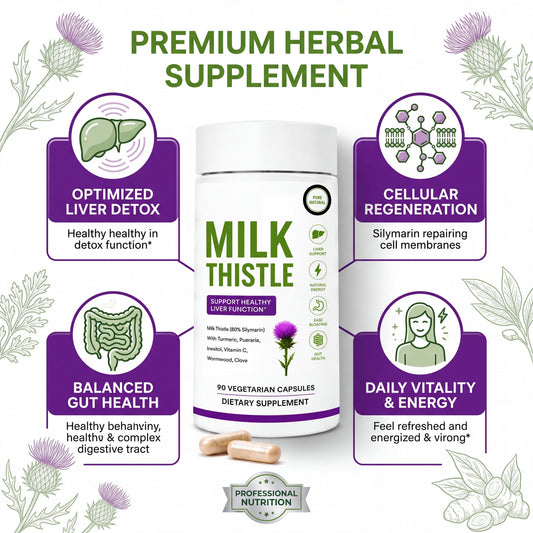
Potentially. Botanical ingredients can repeat across products marketed for different goals. If you use Cayenne, Hawthorn & Beet Root Circulation Drops, Milk Thistle Liver Support – 80% Silymarin Herbal Blend, or other combination formulas, compare their current labels for repeated turmeric, black pepper, garlic, cayenne, or other botanicals.
Do not assume that different wellness categories eliminate overlap.
A label checklist for turmeric + black pepper products
| Label question | Why it matters |
|---|---|
| Is turmeric listed as powder or extract? | Different forms are not directly interchangeable. |
| Are curcuminoids standardized? | Standardization gives compositional information, not guaranteed effectiveness. |
| Is black pepper or piperine listed? | Black pepper itself does not automatically state a standardized piperine dose. |
| What is one serving? | Ingredient amounts must be interpreted per serving. |
| Are there other active botanicals? | Multi-ingredient products create more overlap and interaction questions. |
Frequently asked questions
Does black pepper make turmeric work better?
Piperine can increase curcumin bioavailability, but increased absorption does not by itself prove a better clinical outcome for a specific retail product.
Is piperine the same as black pepper?
Piperine is one constituent of black pepper. A black pepper ingredient is not automatically equivalent to a standardized piperine extract.
Are highly bioavailable curcumin products always safer?
No. NCCIH notes liver-safety concerns reported with some enhanced-bioavailability curcumin formulations.
Can I assume research on curcumin applies to a 12-in-1 formula?
No. Evidence from a specific curcumin preparation cannot automatically be transferred to a different finished multi-ingredient product.
Related Luvixy reading
- 12-in-1 Herbal Blends vs Single-Ingredient Supplements
- How Herbal Potency Labels Work
- Cayenne, Hawthorn, Beet Root & Aged Garlic for Circulation
- Milk Thistle & Silymarin: A Practical Liver Wellness Guide
Evidence & references
Reviewed by the Luvixy Wellness Team for general educational purposes. This article is not medical advice. Dietary supplements are not intended to diagnose, treat, cure, or prevent disease.
Related blend guide: Turmeric and black pepper appear in some broader botanical formulas; compare that context in Cayenne Pepper Supplement Labels.
Tags:
Previous
Why Are Zinc and Copper Paired in Supplements? Balance, Serving Size & Label Overlap
Next
Does 90 Capsules Mean a 90-Day Supply? How to Calculate Supplement Servings