
Cayenne, Hawthorn, Beet Root & Aged Garlic for Circulation
Quick Answer
Key takeaway: cayenne, hawthorn, beet root, and aged garlic often appear in “heart” or “circulation” supplements, but the evidence is not equally strong for every ingredient or outcome. Garlic may modestly affect cholesterol or blood pressure in some people; beetroot nitrate research suggests possible blood-pressure effects with low-certainty evidence; NCCIH says there is little or no quality evidence for hawthorn for most conditions.
These ingredients should be viewed as part of a general wellness category, not as replacements for blood-pressure, cholesterol, heart-disease, or anticoagulation treatment.
How Luvixy’s circulation products differ
Liquid botanical blend
Cayenne, Hawthorn & Beet Root Circulation Drops with D3 + K2 – 60 mL combines several botanicals plus vitamins D3 and K2 in a liquid format.
Multi-botanical softgels
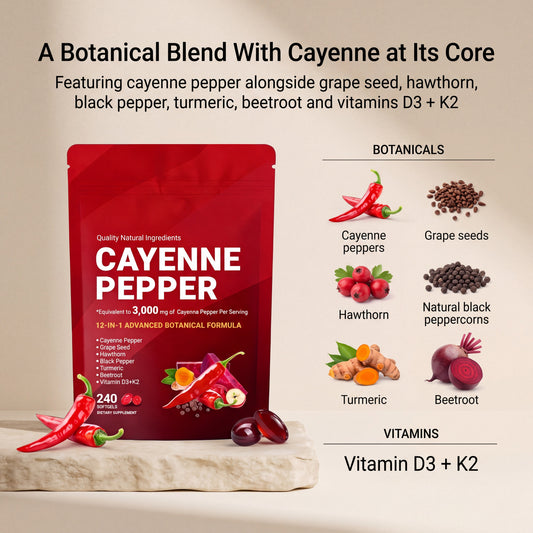
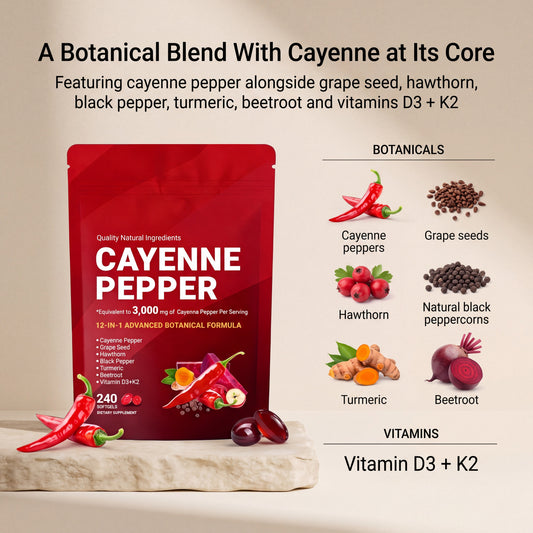
Cayenne Pepper 12-in-1 Botanical Formula 3000 mg – 240 Softgels uses a high-count softgel format and highlights multiple botanicals.
Focused aged garlic
Odorless Aged Garlic Extract 7500 mg – 30 Softgels centers the formula on aged garlic extract.
Garlic: what does research suggest?
NCCIH reports that garlic supplements may reduce total and LDL cholesterol to a small extent in people with high cholesterol, and limited evidence suggests small blood-pressure reductions in people with high blood pressure. These effects are modest and do not make garlic a substitute for prescribed cardiovascular care.
Garlic supplements may increase bleeding risk, especially with anticoagulants, aspirin, or around surgery.
Hawthorn: evidence is much less certain
NCCIH states that there is little or no quality evidence for hawthorn for most health conditions. Evidence in heart failure has been conflicting, and there is not enough evidence to conclude that hawthorn treats heart disease, angina, abnormal rhythm, or arterial plaque.
Hawthorn may also interact with medications, which matters for people already receiving cardiovascular treatment.
Beet root and nitrate research
Beetroot is rich in dietary nitrate, which can be converted through biological pathways to nitric-oxide-related compounds. A 2024 systematic review in people with hypertension suggested a reduction in clinic systolic blood pressure, but the certainty of evidence was low and 24-hour blood-pressure findings were not consistently significant.
This supports cautious language such as “studied for blood-pressure-related outcomes,” not claims that beetroot treats hypertension.
What about cayenne?
Cayenne contains capsaicinoids and has a long history as a food and botanical ingredient. Research on capsaicin and cardiovascular physiology does not establish that a cayenne supplement prevents cardiovascular disease. In multi-ingredient formulas, the exact dose and combination matter.
Before combining circulation supplements
| Check | Why |
|---|---|
| Anticoagulants / antiplatelet drugs | Garlic and some botanicals can affect bleeding risk. |
| Blood-pressure medication | Botanical products may add effects or interact with treatment. |
| Vitamin K antagonists | Products containing vitamin K need special attention with warfarin. |
| Duplicate botanicals | Several Luvixy circulation formulas can share cayenne, beetroot, hawthorn, or garlic-related positioning. |
| Surgery | Tell your healthcare team about herbal products before planned procedures. |
For label terminology such as “3000 mg” or “7500 mg equivalent,” read How Herbal Potency Labels Work.
Frequently asked questions
Does aged garlic replace cholesterol or blood-pressure medication?
No. Research suggests only modest effects in some settings. Do not stop or replace prescribed treatment without medical guidance.
Is hawthorn proven for heart health?
NCCIH says high-quality evidence is limited for most health conditions, and findings in heart failure have been conflicting.
Can I combine several circulation supplements?
Do not stack them automatically. Compare ingredient overlap, vitamin K, medication interactions, and total intake first.
Evidence & references
- NCCIH — Garlic: Usefulness and Safety
- NCCIH — Hawthorn: Usefulness and Safety
- PubMed — 2024 systematic review of beetroot juice and blood pressure in hypertension
Related Luvixy reading
See Wellness Supplements by Goal, How to Read a Supplement Facts Label, and Herbal Potency Labels.
Explore the Heart & Circulation topic cluster
- Aged Garlic Extract vs Regular Garlic: What’s the Difference?
- Beet Root Supplements & Nitrates: What They Mean for Circulation Wellness
- 12-in-1 Herbal Blends vs Single-Ingredient Supplements
Reviewed and updated by the Luvixy Wellness Team for general educational purposes. This article is not medical advice. People with cardiovascular conditions or who take prescription medication should discuss herbal supplements with a qualified healthcare professional.
New circulation-formula deep dives
- Can You Take Multiple Supplements with Vitamin D3 + K2?
- Turmeric + Black Pepper in Supplements: What Does Piperine Change?
- Hawthorn Supplements: What Research Says & How to Read the Label
New cluster guides: Read Hawthorn Berry vs Leaf & Flower Extract, What Does “Odorless” Aged Garlic Mean?, and Cayenne Pepper Labels: Capsaicin, Heat Units & Extracts.
Direct cayenne comparison: See Cayenne Softgels vs Liquid Drops: 12-in-1 Formula vs Hawthorn Beet Root Drops.
Tags:
Previous
Milk Thistle & Silymarin: A Practical Liver Wellness Guide
Next
Thyroid Support Nutrients: Selenium, Zinc, Iodine & More