
3000 mg, 7500 mg & Standardized Extracts: How Herbal Potency Labels Work
Quick Answer
Key takeaway: a large front-label number such as 3000 mg or 7500 mg may describe a raw-herb equivalent, while a statement such as “standardized to 80% silymarin” describes the concentration of a selected constituent. These are different measurements and should not be ranked as if they were one universal potency scale.
Herbal supplement labels can use actual ingredient weight, extract ratios, equivalent botanical amounts, and standardized percentages. Understanding which number you are looking at is more useful than choosing the largest number on the bottle.
What does “mg equivalent” mean on a herbal supplement?
An equivalent amount generally describes how a concentrated botanical extract relates to a larger quantity of original plant material. It does not necessarily mean the capsule or softgel physically contains that entire raw-herb weight.
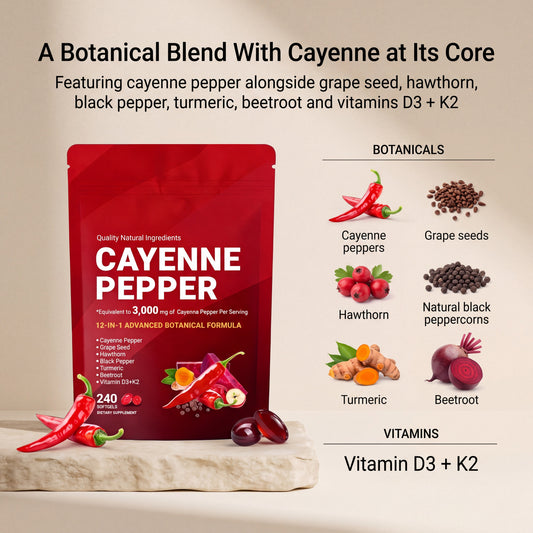
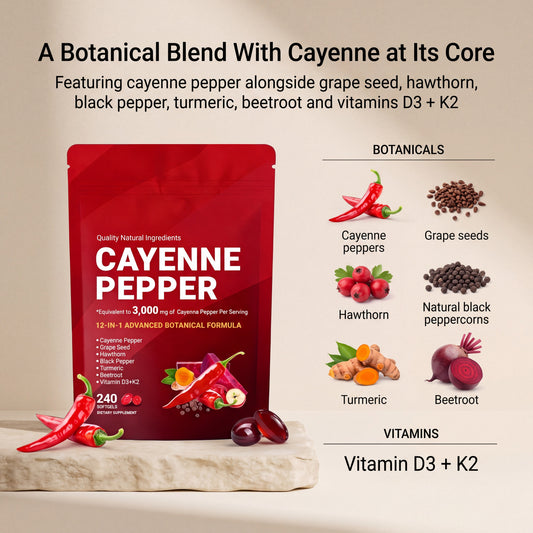
For example, Cayenne Pepper 12-in-1 Botanical Formula 3000 mg and Odorless Aged Garlic Extract 7500 mg use large-number labeling in different botanical formulas. Those numbers should be interpreted with the serving size, ingredient form, and full label—not compared as a simple 3000-versus-7500 strength contest.
How herbal potency wording differs
| Label wording | What it usually tells you | What it does not prove |
|---|---|---|
| “500 mg herb powder” | The listed weight of that botanical ingredient per labeled serving | That it is more concentrated than an extract |
| “10:1 extract” | An extraction relationship between starting material and extract | That every 10:1 extract is identical in composition or quality |
| “Equivalent to 5,000 mg herb” | A stated relationship to the source botanical amount | That 5,000 mg of raw herb is physically present in the serving |
| “Standardized to 80% silymarin” | A specified percentage of a marker or constituent in an extract | That 80% of the entire finished product is milk thistle |
Exact terminology varies by product and jurisdiction, so the Supplement Facts panel and manufacturer labeling should be read together.
Why can’t you compare 3000 mg and 7500 mg directly?
Those figures can refer to different botanicals, serving sizes, extraction methods, and equivalency calculations. A larger equivalent number does not automatically mean a better product, a stronger biological effect, or a more suitable serving.
A more accurate comparison asks: Are these the same botanical? Are they the same ingredient form? Is the serving size the same? Is one number an extract weight while the other is a raw-herb equivalent? Is one formula standardized to a named constituent?
What is a standardized herbal extract?
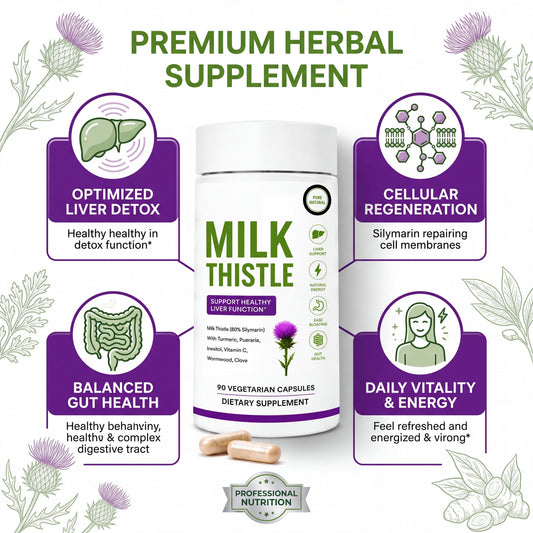
A standardized extract is prepared so that a selected marker or constituent is present at a stated level. Milk Thistle Liver Support – 80% Silymarin, for example, highlights silymarin standardization. That percentage is a different type of information from a raw-herb equivalent milligram claim.
Standardization can make one aspect of an extract easier to describe, but it does not by itself establish clinical effectiveness, product quality, or suitability for an individual.
How to compare herbal supplements more accurately
- Start with serving size. Compare amounts per labeled serving, not just bottle count or front-panel numbers.
- Identify the ingredient form. Whole herb, powder, extract, standardized extract, and equivalent amount are not interchangeable terms.
- Compare like with like. A 7500 mg garlic equivalent should not be treated as universally “stronger” than a 3000 mg cayenne-based formula.
- Read the entire formula. Multi-herb products can contain several botanicals plus vitamins or minerals.
- Check for overlap and medication considerations. Botanical products can interact with medicines, and combining several formulas can duplicate ingredients.
For a step-by-step walkthrough of serving size, amount per serving, other ingredients, and label terminology, read our Supplement Facts label guide.
What the evidence can—and can’t—tell you
Label potency language describes the product; it is not the same thing as clinical evidence. Research findings for one specific extract, dose, or standardized preparation cannot automatically be transferred to every retail product carrying the same herb name. The U.S. National Center for Complementary and Integrative Health also advises consumers to consider evidence quality, product differences, and potential interactions when using dietary supplements.
Frequently asked questions
Is 7500 mg always stronger than 3000 mg?
No. Those numbers may describe different botanicals and different equivalency calculations. They are not a universal strength scale.
Is 80% silymarin the same as 80% milk thistle?
No. “80% silymarin” describes standardization to a group of constituents associated with milk thistle extract; it does not mean 80% of the entire finished product is milk thistle.
Does a higher extract ratio automatically mean better quality?
No. Ratio is one label detail. Botanical identity, manufacturing quality, serving size, standardization, contaminants testing, and evidence for the specific preparation can all matter.
Evidence & references
- U.S. FDA — Dietary Supplement Labeling Guide: Supplement Facts and serving information
- U.S. FDA — Questions and Answers on Dietary Supplements
- NCCIH — Using Dietary Supplements Wisely
Related Luvixy reading
Continue with Milk Thistle & Silymarin: A Practical Liver Wellness Guide or Liquid Drops vs Capsules: How to Choose a Supplement Format.
Reviewed and updated by the Luvixy Wellness Team for general educational purposes. This article is not medical advice. Dietary supplements are not intended to diagnose, treat, cure, or prevent disease. If you take medication, are pregnant or nursing, or have a medical condition, ask a qualified healthcare professional before starting a new supplement.
Related Luvixy reading: Apply these label concepts to amla extract vs powder and milk thistle silymarin percentage calculations.
Apply the potency concepts: See Odorless Aged Garlic Label Questions and Cayenne Pepper Labels: Capsaicin, Heat Units & Extracts.
Related botanical identity guide: Before comparing extract ratios or equivalent milligrams, identify the plant precisely with Common Name vs Latin Name on Herbal Supplement Labels.
Tags:
Previous
Esophageal Wellness Liquid Supplements: What to Look For
Next
Aged Garlic Extract vs Regular Garlic: What’s the Difference?