
12-in-1 Herbal Blends vs Single-Ingredient Supplements: How to Compare Labels
Quick Answer
A 12-in-1 herbal blend is not automatically better or worse than a single-ingredient supplement. A multi-ingredient formula can be convenient when several botanicals are intentionally combined, while a single-ingredient product can make dose, tolerability, and ingredient tracking simpler. The better choice depends on label transparency, serving size, your goal, and what else you already take.
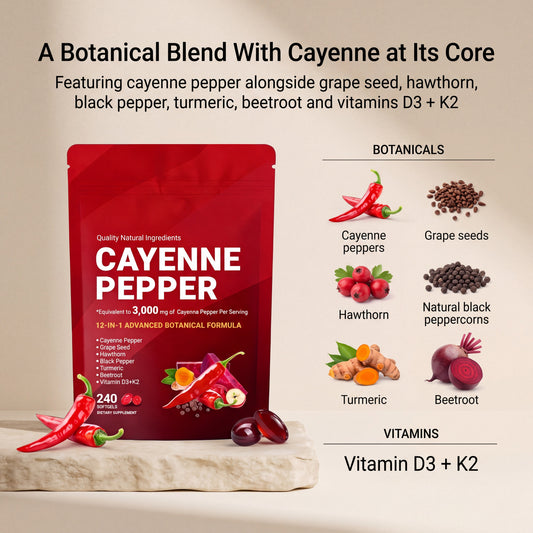
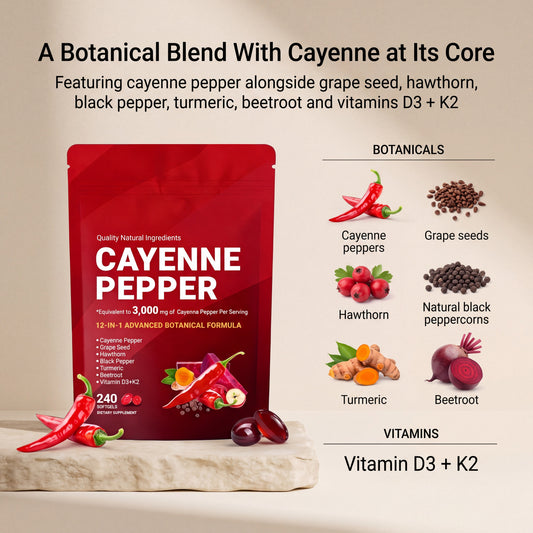
This guide uses Luvixy Cayenne Pepper 12-in-1 Botanical Formula 3000 mg – 240 Softgels as an example of a multi-botanical product and compares that shopping logic with focused products such as Odorless Aged Garlic Extract 7500 mg and milk-thistle formulas.
What does “12-in-1” mean on a supplement?
“12-in-1” is a front-label description indicating that multiple ingredients are included in one formula; it is not a standardized scientific measure of potency. The meaningful information is in the Supplement Facts panel: which ingredients are present, how much is provided per serving, whether a blend is proprietary, and whether amounts are expressed as actual weight or herbal equivalents.
Ingredient count alone cannot tell you whether the formula is appropriate for your needs.
Multi-ingredient blend vs single ingredient: quick comparison
| Feature | Multi-ingredient herbal blend | Single-ingredient supplement |
|---|---|---|
| Convenience | Several ingredients in one serving | One primary ingredient to track |
| Label complexity | Higher; more ingredients and possible blend language | Usually simpler |
| Ingredient overlap risk | Higher when combined with other supplements | Easier to identify overlap |
| Flexibility | Less ability to adjust one component independently | Easier to add or remove one ingredient |
| Research interpretation | Evidence on individual ingredients may not prove the finished blend | Still depends on exact form and dose studied |
How does the FDA require proprietary blends to be labeled?
Under U.S. dietary-supplement labeling rules, a proprietary blend must identify the blend and declare its total weight; the ingredients within the blend are listed in descending order by weight, although individual amounts may not always be provided. Nutrients with established Daily Values are handled separately under the applicable labeling rules.
This matters because a front label may emphasize “12-in-1,” “3000 mg,” or another large number while the Supplement Facts panel provides the details needed for a real comparison.
For a step-by-step walkthrough, see How to Read a Supplement Facts Label.
What does 3000 mg mean in a botanical blend?
Do not assume that 3000 mg means 3000 mg of every ingredient or even 3000 mg of physical plant powder. Botanical labels may use extract weights, blend totals, or equivalent raw-herb amounts. The wording around the number is essential.
Our Herbal Potency Labels guide explains how “equivalent to 3000 mg,” “7500 mg equivalent,” extract ratios, and standardized percentages differ.
When can a multi-ingredient formula be practical?
A blend can simplify a routine when the formula matches a shopper’s intended category and they prefer not to manage several separate bottles. For example, Luvixy Cayenne Pepper 12-in-1 Botanical Formula places several botanicals into one softgel-based routine.
The tradeoff is that you need to understand the entire ingredient list. If you already take garlic, turmeric, beet root, hawthorn, vitamins, or other herbal products, a multi-botanical formula can create overlap even when the product names look different.
When can a single-ingredient or focused formula be easier?
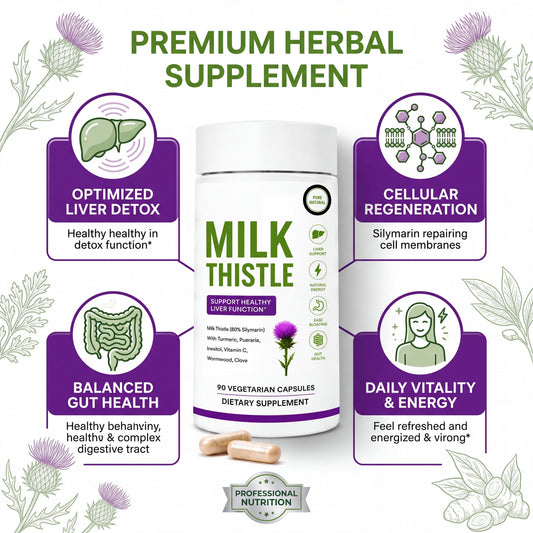
A focused product can make it easier to understand what you are taking and why. Odorless Aged Garlic Extract 7500 mg centers the formula around garlic, while Milk Thistle Liver Support – 80% Silymarin highlights a standardized botanical constituent.
Focused does not necessarily mean more effective. It simply makes ingredient-level comparison and routine adjustment more straightforward.
Five questions to ask before buying a botanical blend
- What is one serving? Capsule count and container count are not the same as serving size.
- Are individual ingredient amounts shown? If not, understand what the declared blend total represents.
- Are any ingredients expressed as equivalents? Do not compare equivalent amounts with physical extract weights as if they were the same.
- Do I already take any of these ingredients? Compare every bottle in your routine for overlap.
- Does medication use change the decision? Botanicals can interact with medicines or matter before surgery.
Does more ingredients mean more benefits?
No. A longer ingredient list does not guarantee a broader or stronger health effect. Research on each ingredient may use different forms, doses, populations, and endpoints, and the finished combination might not have been studied as a whole.
NCCIH advises consumers to evaluate the scientific evidence for supplements and notes that “natural” does not automatically mean safe. This is especially relevant when several active botanicals are combined.
Frequently asked questions
Is a 12-in-1 supplement 12 times stronger?
No. “12-in-1” describes the number of highlighted components, not a twelvefold potency measurement.
Are proprietary blends bad?
Not inherently. They are a permitted labeling format, but shoppers should understand that the total blend weight may be easier to see than each individual botanical amount.
Can I take a 12-in-1 blend with separate herbal supplements?
Possibly, but first compare the full labels. Ingredient duplication and medication interactions can occur even when products are marketed for different wellness goals.
Is a single-ingredient supplement always safer?
No. Any active botanical can have side effects, contraindications, or interactions. A simpler label is easier to evaluate, but suitability still depends on the ingredient and the individual.
Related Luvixy guides
- How to Read a Supplement Facts Label
- How Herbal Potency Labels Work
- Liquid Drops vs Capsules
- How to Build a Daily Supplement Routine
Sources & references
This article is for general educational purposes and is not medical advice. Dietary supplements are not intended to diagnose, treat, cure, or prevent disease.
More multi-ingredient formula guides
- Turmeric + Black Pepper in Supplements: What Does Piperine Change?
- Does 90 Capsules Mean a 90-Day Supply?
- How to Check D3 + K2 Across Multiple Supplements
Deeper blend-label guides
- What Does “Proprietary Blend” Mean? How to Read Total Blend Weight
- What Does “Daily Value Not Established” Mean?
- Other Ingredients on Supplement Labels Explained
Related Luvixy reading: For the packaging side of multi-ingredient formulas, compare softgels and vegetarian capsules. Product example: Cayenne Pepper 12-in-1 Softgels.
Apply this framework: Compare a real multi-ingredient formula with Cayenne Pepper Supplement Labels and see a combined botanical example in Hawthorn Berry vs Leaf & Flower Extract.
New multi-formula example: See Cayenne Softgels vs Liquid Drops for two multi-ingredient products with overlapping botanicals.
Tags:
Previous
Beet Root Supplements & Nitrates: What They Mean for Circulation Wellness
Next
Beet Root Supplements & Nitrates: What They Mean for Circulation Wellness