
Beet Root Supplements & Nitrates: What They Mean for Circulation Wellness
Quick Answer
Beet root appears in many circulation and performance supplements because beetroot naturally contains inorganic nitrate, which the body can convert through the nitrate–nitrite–nitric oxide pathway. That biological pathway is well studied, but shoppers should not assume that every beet-root capsule, drop, powder, or multi-herb blend provides the same nitrate dose or has been tested in the same way as beetroot juice used in clinical research.
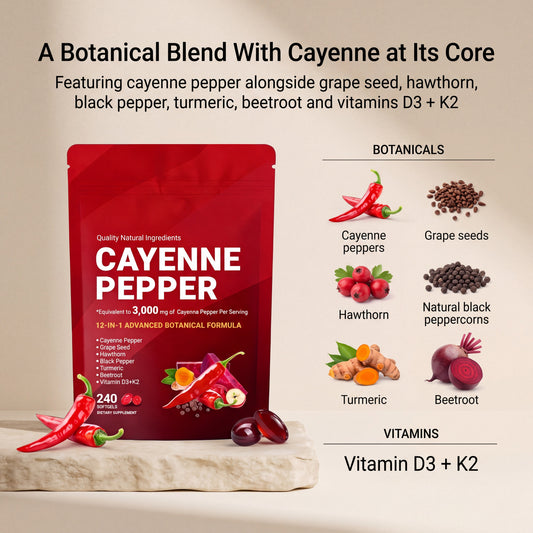
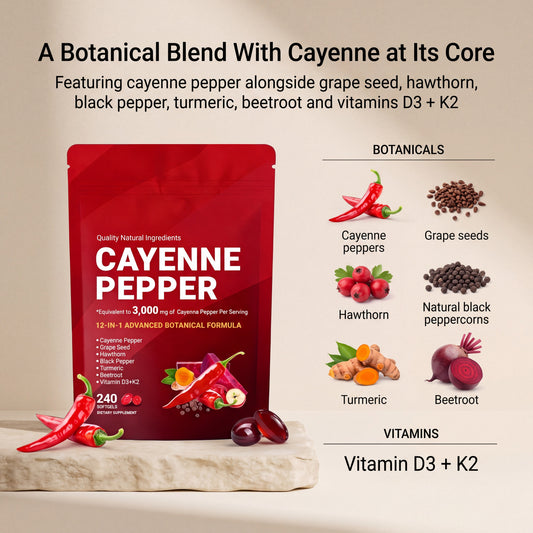
This distinction is especially important when comparing Luvixy Cayenne, Hawthorn & Beet Root Circulation Drops with D3 + K2 – 60 mL and Cayenne Pepper 12-in-1 Botanical Formula 3000 mg – 240 Softgels. Both include beet-root-related positioning, but they are multi-ingredient formulas rather than standardized beetroot-juice interventions.
What are dietary nitrates in beet root?
Dietary nitrate is a naturally occurring compound found in vegetables including beetroot and leafy greens. In the body, nitrate can be converted to nitrite and then to nitric oxide, a signaling molecule involved in normal vascular function.
The word “nitrate” can sound unfamiliar in supplement marketing, but context matters: dietary nitrate from vegetables is different from treating a medical condition with a drug. The amount of nitrate can also vary substantially among foods and supplement preparations.
Does every beet root supplement list nitrate content?
No. A product can contain beet root without declaring a standardized nitrate amount. If the Supplement Facts panel lists beet root but does not specify nitrate content, you should not calculate or assume a nitrate dose from the beet-root milligrams alone.
That is one reason research on nitrate-standardized beetroot juice cannot be transferred automatically to every beet-root supplement. Read our Supplement Facts label guide for a broader explanation of serving size, ingredient amounts, and standardized constituents.
What does research say about beetroot and blood pressure?
Randomized-trial meta-analyses have reported modest reductions in blood pressure with nitrate-rich beetroot juice or inorganic nitrate in some study settings, but results vary by study design, measurement method, dose, duration, and population.
A 2013 systematic review found a reduction in systolic blood pressure across short-term trials of inorganic nitrate and beetroot juice, while later reviews have emphasized heterogeneity and the need for stronger long-term evidence. A 2024 systematic review focused on adults with hypertension also found a reduction in systolic, but not clearly diastolic, blood pressure.
These findings do not establish that a specific Luvixy multi-botanical product lowers blood pressure. Clinical trials commonly use defined beetroot-juice or nitrate interventions, which are not equivalent to a finished blend unless the formulation and dose match the research.
Beet root in a multi-herb circulation formula
In the Cayenne, Hawthorn & Beet Root Circulation Drops, beet root appears alongside cayenne, hawthorn, turmeric, vitamin D3, and vitamin K2. That means the product should be evaluated as a complete formula, not as “beetroot juice in a dropper.”
Likewise, the Cayenne Pepper 12-in-1 Botanical Formula includes multiple botanicals. Front-label numbers and ingredient count do not tell you the nitrate exposure or prove a particular cardiovascular outcome.
For the broader cluster, see Cayenne, Hawthorn, Beet Root & Aged Garlic for Circulation.
How should you compare beet root supplements?
| Question | Why it matters |
|---|---|
| Is beet root the main ingredient or part of a blend? | A multi-ingredient formula cannot be evaluated as if it were pure beetroot. |
| Is nitrate content standardized or declared? | Beet-root weight alone does not tell you nitrate dose. |
| What is one serving? | Bottle size and total milliliters are not the same as amount per serving. |
| Are D3, K2, garlic, hawthorn, or other ingredients also present? | Other nutrients and botanicals can affect how the formula fits with medications and other supplements. |
| Does the marketing claim match the evidence? | Research on beetroot juice should not be used as proof for an untested finished blend. |
What about vitamin K2 in circulation drops?
Vitamin K is an important nutrient, but it also has a well-established interaction with warfarin and related anticoagulants. People taking these medicines need consistent vitamin K intake and should discuss supplements containing K2 with their healthcare provider.
Frequently asked questions
Is beet root the same as nitric oxide?
No. Beetroot contains dietary nitrate. Through normal biological pathways, nitrate can contribute to nitric oxide production, but beet root itself is not nitric oxide.
Does more beet root always mean more nitrate?
No. Nitrate concentration varies among preparations. Unless nitrate content is declared or standardized, you should not infer it from the beet-root weight alone.
Can beet root supplements replace blood-pressure medication?
No. Supplements should not replace prescribed treatment or delay evaluation of high blood pressure or cardiovascular symptoms.
Can I combine beet root, aged garlic, and hawthorn supplements?
Combining several circulation-positioned products can create ingredient overlap and medication considerations. Compare the full labels and speak with a clinician or pharmacist if you use cardiovascular or anticoagulant medication.
Related Luvixy guides
- Cayenne, Hawthorn, Beet Root & Aged Garlic for Circulation
- How Herbal Potency Labels Work
- How to Read a Supplement Facts Label
Sources & references
- PubMed: Inorganic nitrate and beetroot juice supplementation and blood pressure — systematic review and meta-analysis
- PubMed: Beetroot juice and blood pressure in adults with hypertension — systematic review and meta-analysis
- NIH Office of Dietary Supplements: Vitamin K fact sheet
This article is for general educational purposes and is not medical advice. Dietary supplements are not intended to diagnose, treat, cure, or prevent disease.
Related circulation reading: See Hawthorn Berry vs Leaf & Flower Extract and Cayenne Pepper Supplement Labels for neighboring botanical-label topics.
Tags:
Previous
12-in-1 Herbal Blends vs Single-Ingredient Supplements: How to Compare Labels
Next
12-in-1 Herbal Blends vs Single-Ingredient Supplements: How to Compare Labels