
Hawthorn Supplements: What Research Says & How to Read the Label
Quick Answer
Direct answer: hawthorn is a botanical commonly used in heart and circulation supplement categories, but current evidence does not establish it as a treatment for cardiovascular disease. NCCIH reports little or no quality evidence for hawthorn for most health conditions, conflicting findings in heart failure, and insufficient evidence for heart disease, angina, abnormal heart rhythm, or arterial plaque.
This makes hawthorn a good example of why wellness positioning, traditional use, and proven clinical outcomes should be kept separate.
What is hawthorn?
Hawthorn refers to plants in the Crataegus genus. Hawthorn has a long history of traditional use and is now promoted in products for heart and blood-vessel wellness. Different species, plant parts, extracts, and multi-ingredient combinations may not be equivalent.
What does research say about hawthorn?
Evidence is limited and depends on the exact preparation and outcome. NCCIH states that evidence in people with heart failure is conflicting and that there is not enough evidence to know whether hawthorn affects heart disease, angina, abnormal heartbeat, or arterial plaque.
Therefore, a product containing hawthorn should not be described as replacing blood-pressure medicine, cholesterol treatment, anticoagulation, or medical care for cardiovascular symptoms.
Where does hawthorn appear in Luvixy formulas?
Cayenne, Hawthorn & Beet Root Circulation Drops with D3 + K2 – 60 mL combines hawthorn with other botanicals and vitamins in a liquid formula.
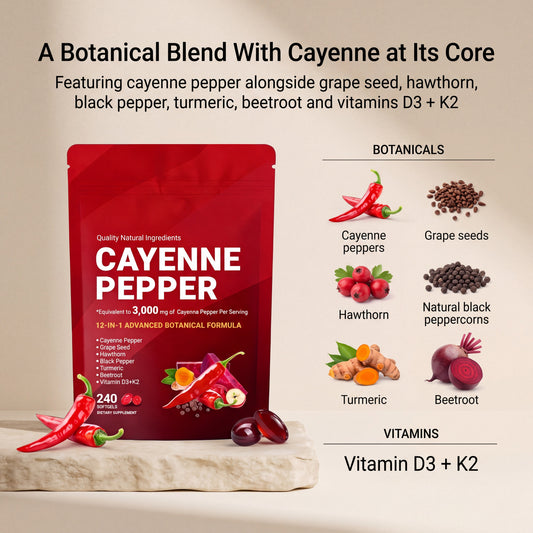
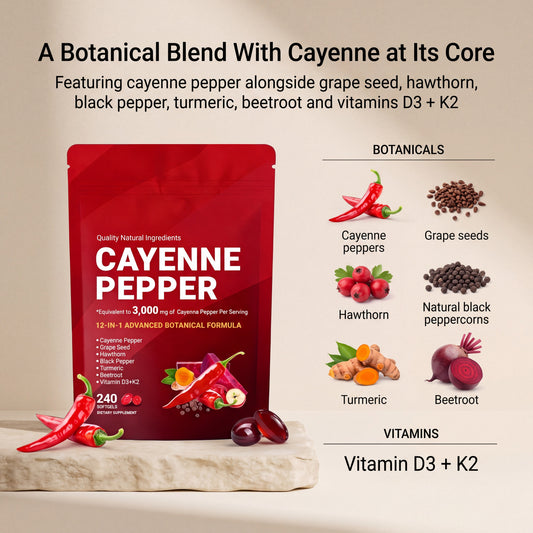
Cayenne Pepper 12-in-1 Botanical Formula 3000 mg – 240 Softgels is a broader multi-botanical formula that also includes hawthorn-related positioning. Evidence for a single ingredient should not be assumed to prove the effects of a finished multi-ingredient product.
How should you read a hawthorn supplement label?
| Label detail | Why it matters |
|---|---|
| Species or botanical name | Different hawthorn species are not automatically interchangeable. |
| Plant part | Leaf, flower, berry, or root products can differ. |
| Extract vs powder | Extract concentration and raw plant powder are not the same measurement. |
| Amount per serving | Front-label numbers can refer to blend totals or equivalents. |
| Other botanicals and vitamins | Multi-ingredient products may create overlap with other supplements. |
For help with extract ratios and equivalent milligrams, see How Herbal Potency Labels Work.
What medication and safety issues matter?
People taking medication should discuss hawthorn and other herbal products with a healthcare professional. NCCIH notes potential herb-drug interaction concerns, and long-term safety has not been well studied.
NCCIH also reports an FDA warning about certain products sold as “tejocote root” or Mexican hawthorn that were found to contain toxic yellow oleander. This warning concerns those specific mislabeled/adulterated products; it should not be generalized to unrelated hawthorn products without evidence.
How does hawthorn fit with other circulation ingredients?
Hawthorn may appear beside beet root, cayenne, garlic, turmeric, or vitamins D3 and K2. Each ingredient has a different evidence base and safety profile. Read Cayenne, Hawthorn, Beet Root & Aged Garlic for Circulation for the broader cluster.
Frequently asked questions
Is hawthorn proven to improve heart health?
No broad conclusion is supported. NCCIH reports little or no quality evidence for most conditions and conflicting evidence in heart failure.
Can hawthorn replace cardiovascular medication?
No. Do not replace prescribed treatment or delay evaluation of chest pain, shortness of breath, fainting, or other cardiovascular symptoms because a supplement contains hawthorn.
Is hawthorn berry the same as hawthorn extract?
Not necessarily. Plant part, extraction method, concentration, and serving size can differ, so compare exact label details.
Can I combine several circulation supplements?
Do not stack them automatically. Check repeated hawthorn, beetroot, garlic, cayenne, vitamin D, vitamin K, and medication interactions first.
Related Luvixy reading
- Cayenne, Hawthorn, Beet Root & Aged Garlic for Circulation
- Beet Root Supplements & Nitrates
- Aged Garlic Extract vs Regular Garlic
- 12-in-1 Herbal Blends vs Single-Ingredient Supplements
Sources & references
Reviewed and updated by the Luvixy Wellness Team for general educational purposes. This article is not medical advice. Dietary supplements are not intended to diagnose, treat, cure, or prevent disease.
New related guide: Compare the plant parts and ingredient forms in Hawthorn Berry vs Leaf & Flower Extract. Product example: Cayenne Hawthorn Beet Root Drops.
Tags:
Previous
Iodine from Supplements vs Iodized Salt: How to Check Your Total Daily Intake
Next
Ginkgo Biloba Extract vs Ginkgo Leaf Powder: What’s the Difference?