
mg vs mcg vs IU on Supplement Facts: How to Compare Units Without Misreading Potency
Quick Answer
mg, mcg and IU are not interchangeable labels for the same quantity. One milligram (mg) equals 1,000 micrograms (mcg). International Units (IU) are different because the conversion depends on the specific nutrient. For vitamin D, 1 mcg equals 40 IU. Do not use that vitamin D conversion for other nutrients.
What Is the Difference Between mg and mcg?
Milligrams and micrograms are metric units of mass. A microgram is much smaller than a milligram.
- 1 mg = 1,000 mcg
- 0.1 mg = 100 mcg
- 500 mcg = 0.5 mg
Why this matters on supplement labels
Calcium, magnesium, amino acids and many botanicals are commonly shown in mg, while nutrients such as iodine, selenium and vitamin K are often shown in mcg. A smaller-looking number can still represent an appropriate amount because the units are different.
What Does IU Mean?
IU stands for International Units. Unlike mg and mcg, IU is based on biological activity for a particular nutrient rather than being a universal unit of mass.
Vitamin D conversion
For vitamin D, 1 mcg = 40 IU. Therefore, 25 mcg of vitamin D equals 1,000 IU.
Why you should not use one IU formula for every nutrient
IU conversions are nutrient-specific. A conversion rule used for vitamin D should not be reused for vitamin A or another nutrient unless the appropriate nutrient-specific rule is known.
How Do These Units Appear Across Luvixy Products?
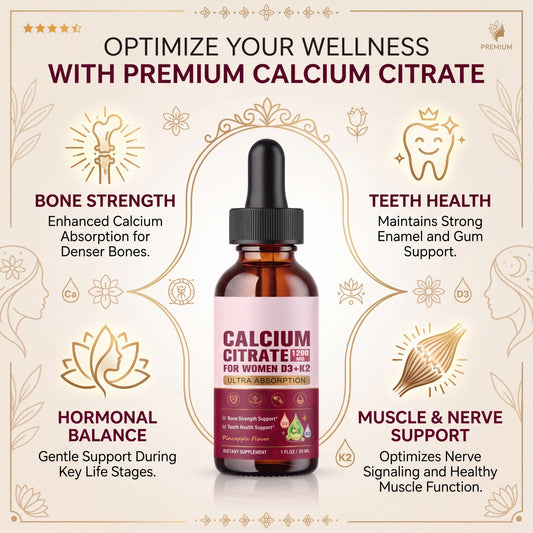
Different Luvixy formulas use different units because their ingredients are measured differently. For example, Calcium Citrate with D3 + K2 Drops combines a mineral measured in mg with vitamins that may be displayed in mcg or IU. Thyroid Support Drops can include nutrients such as iodine and selenium that are commonly displayed in mcg.
How Do You Compare Two Labels With Different Units?
Step 1: Match the ingredient
Only compare the same nutrient or ingredient with itself.
Step 2: Match the serving size
Use one labeled serving from each product.
Step 3: Convert only when necessary
If one label uses mg and another uses mcg, convert them to the same metric unit. If IU is involved, use the correct nutrient-specific conversion.
Step 4: Check % Daily Value
%DV can provide additional context for vitamins and minerals, but it is not a personalized dosing recommendation.
Related Label Guides
For nutrient-specific examples, read Vitamin D3 + K2 Supplement Labels: IU, mcg & %DV, Selenium in Thyroid Supplements, and Iodine from Supplements vs Iodized Salt.
Frequently Asked Questions
Is 1 mg the same as 1 mcg?
No. One milligram equals 1,000 micrograms.
Is 1,000 IU always the same number of micrograms?
No. IU conversion depends on the nutrient. For vitamin D, 1,000 IU equals 25 mcg.
Why are iodine and selenium usually listed in mcg?
They are typically present in much smaller quantities than ingredients commonly measured in milligrams.
Can I compare the biggest number on two labels?
No. First check the ingredient, unit and serving size.
Where can I learn the basics of the Supplement Facts panel?
Read How to Read a Supplement Facts Label.
Educational content only. Unit conversion does not determine an appropriate personal dose. Discuss individualized supplement intake with a qualified healthcare professional.
Tags:
Previous
Common Name vs Latin Name on Herbal Supplement Labels: Botanical Identity, Plant Part & Extract Form
Next
What Does More Than 100% Daily Value Mean on a Supplement Label?