
What Does “Daily Value Not Established” Mean on Supplement Facts?
Quick Answer
Direct answer: “Daily Value Not Established” means the U.S. FDA has not set a Daily Value for that dietary ingredient. It does not mean the ingredient amount is zero, that the ingredient is automatically unsafe, or that the product is automatically effective.
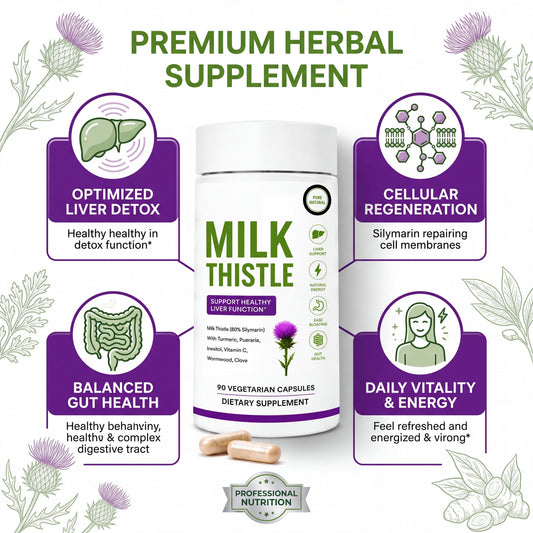
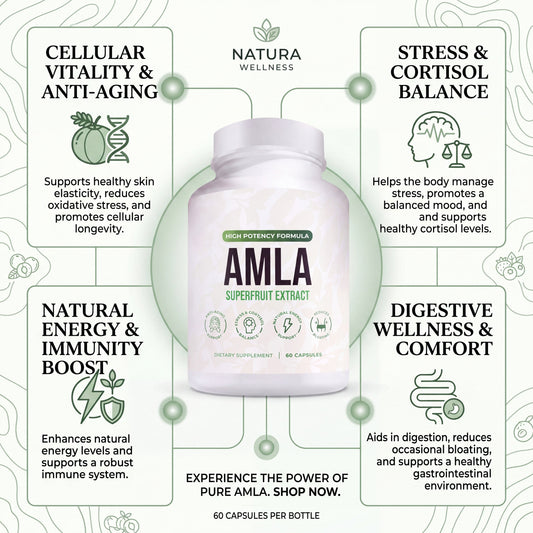
This wording appears frequently with botanicals and other dietary ingredients found in products such as Ginkgo Biloba Extract Drops, Amla Superfruit Extract, and Milk Thistle 80% Silymarin Herbal Blend.
What is a Daily Value?
Direct answer: Daily Value is a labeling reference used to help consumers interpret how much of a nutrient a serving provides relative to a standardized daily reference amount.
For nutrients with an established Daily Value, a Supplement Facts panel can show the amount per serving and %DV. The %DV is a reference point; it is not a personalized prescription for every individual.
What does “Daily Value Not Established” mean?
Direct answer: FDA requires dietary ingredients without established Daily Values to be identified with a symbol that points to the footnote “Daily Value Not Established.”
The ingredient can still have a declared quantitative amount per serving. The key point is that there is no FDA Daily Value to convert that amount into a meaningful %DV.
Why do many botanicals have no %DV?
Direct answer: many herbs, botanical extracts, amino acids, and other specialty dietary ingredients do not have established RDIs or DRVs under FDA labeling rules.
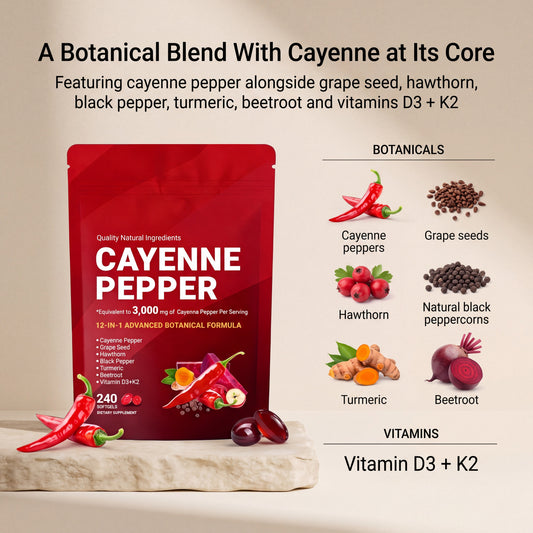
That is why a formula can list ingredients such as ginkgo, milk thistle, amla, hawthorn, or other botanicals with an amount per serving but no percentage Daily Value.
Does no Daily Value mean there is no research?
Direct answer: no. Daily Value status is a labeling concept, not a score for scientific evidence.
An ingredient can have no established DV and still have human research, limited research, traditional use, safety data, or unresolved questions. Conversely, having a Daily Value does not prove that taking more than required produces extra benefit.
How should you compare ingredients without a Daily Value?
- Check the exact ingredient name and plant part.
- Read the amount per serving.
- Determine whether the label describes a powder, extract, equivalent amount, or standardized constituent.
- Look for a proprietary blend. Individual ingredient amounts may not always be disclosed inside a blend.
- Compare evidence for the specific preparation. Research on one extract should not be automatically applied to every product.
- Check overlap with other products.
For extract terminology, see 3000 mg, 7500 mg & Standardized Extracts: How Herbal Potency Labels Work.
Is a higher milligram number better when there is no DV?
Direct answer: not necessarily. A larger number can describe a different serving size, extract ratio, raw-herb equivalent, total blend weight, or ingredient form.
Compare like with like rather than ranking products by the biggest front-label number. Our Supplement Facts guide provides a step-by-step framework.
Frequently asked questions
Does “Daily Value Not Established” mean the ingredient is unregulated?
No. Dietary supplements and their labeling remain subject to applicable U.S. laws and FDA requirements. The phrase specifically indicates that a Daily Value has not been established for that ingredient.
Why is there a dagger or asterisk next to some ingredients?
The symbol usually points to the footnote explaining that a Daily Value has not been established. Always read the footnote on that specific label.
Can a botanical have a standardized percentage and still have no DV?
Yes. Standardization describes the level of a selected constituent or marker; it does not create an FDA Daily Value.
Should I use %DV to compare every supplement?
No. %DV is useful when it exists, but botanicals and many specialty ingredients require a different comparison approach.
Related Luvixy reading
- 12-in-1 Herbal Blends vs Single-Ingredient Supplements
- Ginkgo Biloba Extract vs Leaf Powder
- Milk Thistle Extract vs Silymarin
- Amla Supplement Extract Guide
Evidence & references
- U.S. FDA — Dietary Supplement Labeling Guide: Nutrition Labeling
- U.S. FDA — Dietary Supplement Labeling Guide: Claims
Educational content only. Always use the actual product label as the source of truth for serving size and ingredient amounts.
Companion guide: When a nutrient does have a %DV, read What Does More Than 100% Daily Value Mean on a Supplement Label?.
Tags:
Previous
Selenium in Thyroid Supplements: How to Check mcg, %DV, Total Intake & Upper Limits
Next
What Does “Proprietary Blend” Mean on a Supplement Label? How to Read Total Blend Weight