
Calcium Citrate vs Calcium Carbonate: Absorption, Serving Size & Label Differences
Quick Answer
Direct answer: Calcium citrate and calcium carbonate are both common calcium supplement forms, but they differ in elemental calcium content and how dependent they are on stomach acid. The most useful comparison is not the large number on the front of a bottle—it is the elemental calcium per serving shown in Supplement Facts, plus serving size, food instructions, and any added nutrients such as vitamin D3 or K2.
Calcium citrate vs calcium carbonate: what is the main difference?
Calcium carbonate contains more elemental calcium by weight, while calcium citrate is less dependent on stomach acid for absorption. The NIH Office of Dietary Supplements notes that calcium carbonate is about 40% calcium by weight and calcium citrate about 21%. It also notes that calcium citrate can be taken without food, while calcium carbonate is generally absorbed better with a meal, especially when stomach acid is low.
This does not mean one form is automatically “better” for everyone. The practical choice depends on the amount of elemental calcium supplied, serving size, food timing, tolerability, other nutrients in the formula, and your overall calcium intake from food and supplements.
Why elemental calcium matters more than the compound weight
Supplement Facts should tell you the amount of calcium itself, not simply the total weight of the calcium compound. FDA labeling guidance specifically explains that when calcium carbonate supplies calcium, the label declares the weight of calcium rather than the full calcium-carbonate salt.
That distinction is useful when a front label uses a large number. A shopper should check the back label for:
- Serving Size — for example, one dropper, two capsules, or another labeled amount.
- Calcium amount per serving — the elemental calcium actually declared.
- % Daily Value — useful for comparing products on the same basis.
- Source — such as calcium citrate or calcium carbonate.
- Added nutrients — for example vitamin D3 and vitamin K2.
For a deeper walkthrough, read How to Read a Supplement Facts Label.
Does serving size change calcium absorption?
Yes—the amount of elemental calcium taken at one time can matter. NIH ODS reports that calcium absorption from supplements is highest at doses of 500 mg or less at one time, and the percentage absorbed tends to decrease as the single dose increases.
This is another reason to read “Amount Per Serving” rather than assuming that a bigger front-label number means a more useful serving. If a label recommends multiple servings per day, follow the product directions and discuss your total intake with a healthcare professional when appropriate.
What about calcium with vitamin D3 and K2?
A combination formula should be evaluated nutrient by nutrient. Vitamin D, vitamin K, and calcium have different Daily Values, intake considerations, medication interactions, and evidence bases. If you use more than one supplement containing D3 or K2, calculate your total daily intake instead of evaluating each bottle in isolation.
See Calcium Citrate with Vitamin D3 + K2: A Women’s Wellness Guide and Can You Take Multiple Supplements with Vitamin D3 + K2?.
How to compare two calcium supplements in 60 seconds
Use the same five-point checklist for both products.
- Compare elemental calcium per serving.
- Compare serving size and servings per container.
- Identify calcium form: citrate, carbonate, or another form.
- Check whether the directions specify taking it with food.
- Check overlapping vitamin D3, K2, magnesium, or other nutrients across your routine.
If you prefer a liquid format, also read 30 mL vs 60 mL Supplement Drops. Bottle volume by itself does not tell you the amount of calcium in a serving.
Related Luvixy product
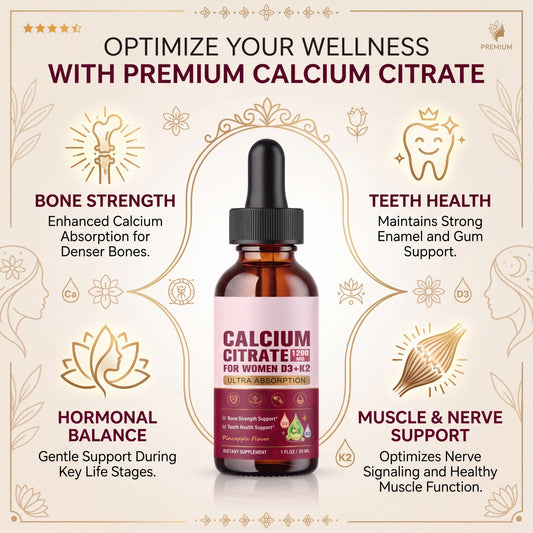
Explore Calcium Citrate 1200 mg with D3 + K2 for Women – 30 mL Drops. Use the product’s current Supplement Facts and directions as the source of truth for its serving size and ingredient amounts.
FAQ
Is calcium citrate better absorbed than calcium carbonate?
Not in every situation. Calcium citrate is less dependent on stomach acid and can be taken without food; calcium carbonate is commonly taken with food. Individual absorption also depends on dose, diet, age, and other factors.
Does “1200 mg calcium citrate” always mean 1200 mg of elemental calcium?
No. Compound weight and elemental calcium are not the same concept. Check the Supplement Facts panel for the declared calcium amount per serving.
Can I take calcium, D3, and K2 together?
Combination products exist, but suitability depends on the individual. Review total intake from all products and ask a healthcare professional if you take medications or have a medical condition.
Should calcium supplements be split into smaller servings?
Sometimes, depending on the labeled dose. NIH ODS notes higher percentage absorption at supplemental calcium doses of 500 mg or less at one time. Follow product directions and professional guidance.
References
- NIH Office of Dietary Supplements — Calcium Fact Sheet for Health Professionals
- FDA — Dietary Supplement Labeling Guide, Nutrition Labeling
Educational information only; not medical advice. Supplements are not intended to diagnose, treat, cure, or prevent disease. Consult a qualified healthcare professional about your individual needs, especially if you are pregnant, taking medication, or managing a health condition.
Related Luvixy reading: If your calcium formula also contains D3 + K2, use our D3 + K2 label guide alongside this comparison.
Related format comparison: After comparing calcium forms, see Calcium Citrate Liquid Drops vs Tablets for elemental calcium and serving-size differences.
Tags:
Previous
Soursop Multivitamin Drops: How to Read Botanicals, Vitamins & Minerals on the Label
Next
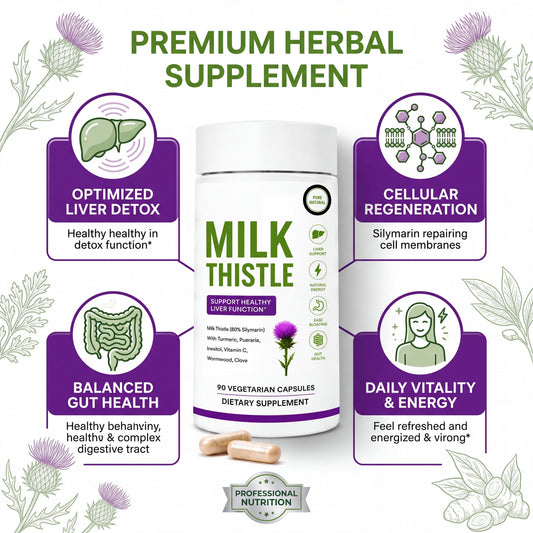
Milk Thistle Extract vs Silymarin: What Does “80% Silymarin” Mean?